Strategic Market Intelligence Future Procurement Trends in Private Label Dog Food OEM (2025–2030)
To maintain a competitive edge, pet brand founders and procurement officers must align their OEM strategies with macro-shifts in consumer sentiment, environmental regulation, and canine bio-tech research.
1. Sustainable & Alternative Protein Matrixing
As traditional livestock supply chains experience cost volatility and carbon scrutiny, global buyers are seeking OEM partners capable of integrating alternative protein sources. Our R&D department is at the forefront of combining high-yield black soldier fly larvae (BSFL) meal, micro-algae rich in DHA, and upcycled wild-caught fish hydrolysates into premium dry kibble matrices without sacrificing palatability scores.
2. Microbiome-Centric & Postbiotic Extrusion Dynamics
The pet nutrition landscape is rapidly transitioning from simple prebiotics to heat-stable postbiotics and heat-protected micro-encapsulated probiotics. Modern OEM buyers are requesting targeted gut-microbiome support formulas that survive the high-temperature high-pressure (HTST) extrusion process, delivering active metabolites directly to the canine colon for immune and metabolic health enhancement.
3. DNA Traceability & Transparency Protocols
"Meat meal" transparency concerns are driving global demand for single-origin, fully traceable animal proteins. Procurement teams are moving away from generic supply channels toward contracts that enforce DNA testing on raw material intake. ThePetFoodPeople® enforces strict vendor qualification audits, ensuring that every batch of British lamb, chicken, or salmon can be mapped back to regional farms and fisheries.
4. Eco-Compliant High-Barrier Mono-Material Packaging
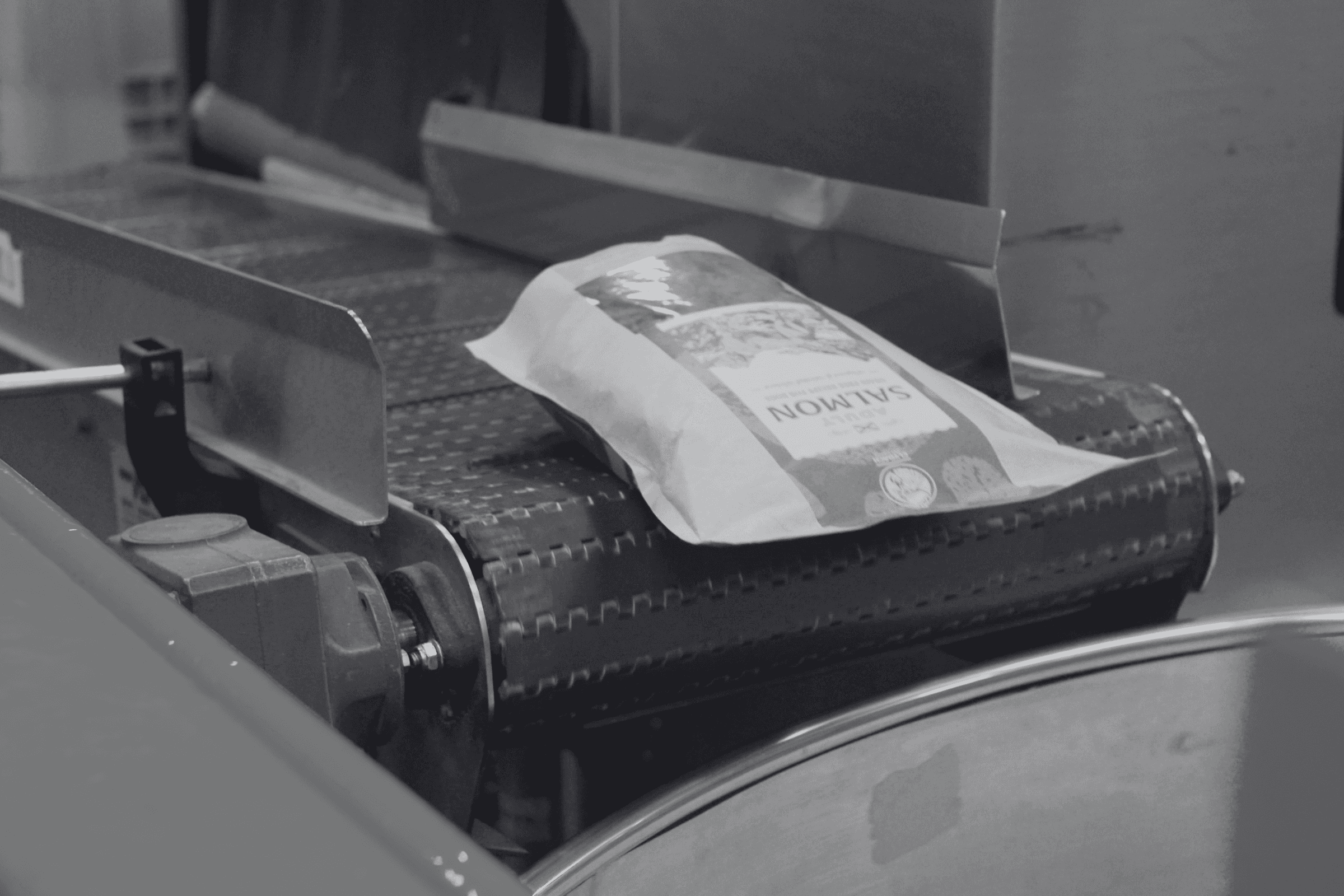
Legislative mandates across the EU, UK, and North America are accelerating the phase-out of multi-layer un-recyclable foil laminates. Future-proof OEM solutions require fully recyclable Mono-PE (Polyethylene) and Mono-PP (Polypropylene) structures that preserve oxygen and moisture barriers (low OTR and MVTR rates) to guarantee a minimum 18-month shelf life without compromising sustainability metrics.