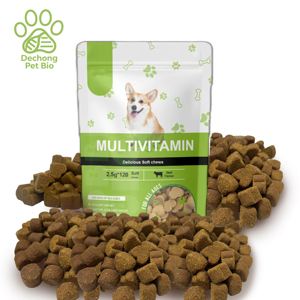
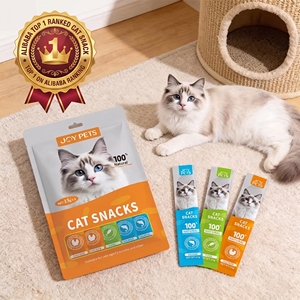
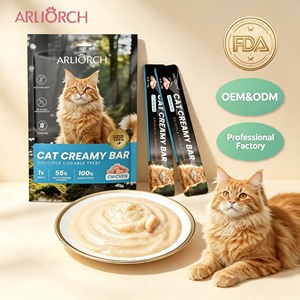
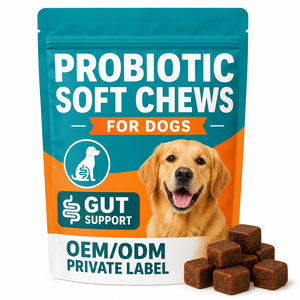
End-to-End European Quality Pet Food, Custom Supplement Chews, and High-Meat Purée Manufacturing directly connected to the Port of Hamburg Logistics Network.
Factory-Direct Export Portfolio
EU-Compliant Private Label Pet Treats & Supplements
Custom formulated, certified for European entry, and engineered for high palatability and digestive performance.
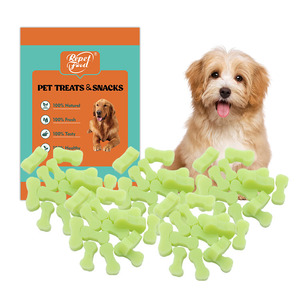
OEM Multivitamin Soft Chew Supplements for Dogs of All Ages Immunity & Digestion Powders Turkey Beef Fish Custom Dog Treats
1. Hamburg as the Strategic European Gateway for Pet Food & Treat Imports
The Metropolitan Region of Hamburg stands as Northern Europe’s primary logistics hub for high-value pet nutritional products. Positioned along the Elbe River, the Port of Hamburg (specifically terminal complexes at Altenwerder and Waltershof) acts as the decisive entry node for ocean container shipments originating from premier OEM manufacturing hubs in Asia and Great Britain. For pet brand owners, wholesale distributors, and retail chain procurement managers operating across Germany, the DACH region (Germany, Austria, Switzerland), and Scandinavia, securing a reliable, direct OEM manufacturing partner capable of navigating complex European Union veterinary entry requirements is paramount.
Navigating the EU regulatory framework requires far more than basic manufacturing capacity. Products entering through the Port of Hamburg are subjected to strict veterinary checks conducted by the Hamburg Border Inspection Post (Veterinäramt Hamburg Hafen). Importers must demonstrate absolute adherence to European Regulation (EC) No 178/2002 regarding general food and feed law, Regulation (EC) No 767/2009 on the placing on the market and use of feed, as well as strict pathogen-free certifications for Salmonella and Enterobacteriaceae.
“Information Gain Advantage: Supply chain efficiency for pet treat importers in Hamburg is not merely determined by FOB costs, but by complete TRACES (Trade Control and Expert System) documentation compliance, moisture activity control, and batch-level micro-nutrient consistency upon port arrival.”
Localized Supply Chain Optimization in Northern Germany
Distribution networks originating from Hamburg supply national giants such as Fressnapf and Das Futterhaus, alongside rapidly expanding Direct-to-Consumer (D2C) e-commerce fulfillment centers across Lower Saxony and Schleswig-Holstein. OEM manufacturers serving this region must tailor their packaging, palletization, and formulations to handle variable transport humidity, prolonged automated warehousing storage, and strict shelf-impact criteria.
Port Logistics & Clearance
Seamless processing via Hamburg Hafen Vet-Amt with pre-issued TRACES NT certificates, laboratory certificates of analysis (CoA), and health documentation.
DACH Multi-Channel Retail
Custom packaging engineered for high shelf-impact in German brick-and-mortar retail and automated e-commerce sorting hubs.
German Labeling Compliance
Multi-lingual packaging artwork aligned with local consumer laws, featuring clear percentage declarations of ingredients and legal EU feed category classifications.
2. Micro-Nutrient Engineering & Cold-Press Science for OEM Pet Treats
Modern European consumers, particularly in Northern Germany, treat pet nutrition as an extension of preventative human healthcare. OEM manufacturers must move beyond simple byproduct extrusion to scientific, nutrient-dense processing techniques. Our production infrastructure integrates proprietary cold-pressing technology for functional soft chews, alongside low-temperature, twin-screw thermal extrusion for dental treats and kibble.
Cold-Pressed Functional Soft Chews vs. High-Temperature Extrusion
Standard high-temperature extrusion processes subject raw materials to temperatures exceeding 130°C and pressures above 30 bar. While this ensures starch gelatinization, it severely degrades heat-sensitive bio-actives including live probiotic cultures (*Bacillus coagulans*), heat-labile B-vitamins, bioavailable omega fatty acids, and natural digestive enzymes. Cold-pressed soft chews, manufactured under strictly controlled thermal processing (< 45°C), retain up to 98% of active functional compounds.
Technical Parameter
Cold-Pressed Soft Chews
Thermal Extruded Treats
High-Meat Liquid Purée Bar
Thermal Processing Temp
< 45°C (Nutrient Retention)
110°C - 140°C
85°C - 95°C (Retort Pasteurized)
Probiotic Viability
High (> 1x10⁹ CFU/g retained)
Requires post-extrusion coating
N/A (Focus on Prebiotics)
Water Activity ($a_w$)
0.60 – 0.64 (Mold Resistant)
0.35 – 0.50 (Dry Stable)
0.92 – 0.96 (Aseptically Sealed)
Active Palatants
Real Hydrolyzed Poultry/Beef Liver
Topical Spray Fats & Digests
Direct Fresh Muscle Meat (>55%)
EU Shelf-Life Stability
24 Months (Nitrogen Flushed)
24 Months
18 - 24 Months
Functional Bio-Active Formulations for Canine & Feline Wellness
To differentiate pet brands in competitive European markets, our OEM engineering teams focus on specific therapeutic outcomes backed by trial data:
Microbiome & Gut Microbiota Support: Integration of spore-forming probiotics (*Bacillus coagulans*) combined with chicory root inulin (FOS) and galactooligosaccharides (GOS) to stabilize intestinal flora, enhance short-chain fatty acid (SCFA) production, and improve stool quality.
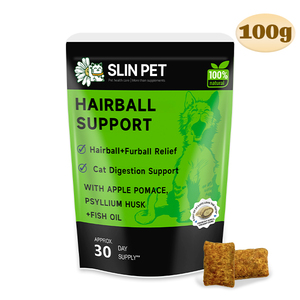
Feline Hairball Elimination Matrices: Formulated with purified citrus pulp pectin and micro-milled apple pomace. High dietary insoluble fiber binds ingested fur in the stomach, promoting gentle gastrointestinal passage without relying on synthetic mineral oils.
Advanced Joint & Mobility Complex: Combining low-molecular-weight chondroitin sulfate, glucosamine HCl, methylsulfonylmethane (MSM), and cold-extracted green-lipped mussel powder to reduce joint inflammation in senior canines.
Ultra-High Meat Liquid Purées: Utilizing 55% real fresh meat cuts (chicken breast, deep-sea cod, salmon), processed into a stable emulsion without grain starches, artificial gums (carrageenan-free), or synthetic flavor enhancers.
3. Localized Pet Market Trends in Hamburg & The DACH Region
The pet market in Germany and neighboring European countries is experiencing a profound structural shift driven by humanization, environmental consciousness, and stringent regulatory demands. Exporters and brand owners targeting Hamburg must align their product development strategies with three dominant trends:
1. The Transition from 'Treats' to 'Functional Supplements'
German pet owners increasingly reject purely recreational snacks that contribute to pet obesity. The trend rapidly favors treats that deliver measurable health benefits. Soft chews that address daily multivitamin requirements, dental hygiene, anxiety relief (utilizing L-Theanine and Chamomile extracts), and skin/coat shine (via marine collagen and microalgae oil) command premium pricing and higher consumer repeat-purchase rates.
Food intolerances and cutaneous adverse food reactions (CAFR) are frequently diagnosed in European veterinary clinics. Modern brand portfolios serving Hamburg demand single-source novel protein treats—such as duck, lamb, turkey, or specialized insect proteins—eliminating common allergens like wheat, soy, corn, dairy, and mixed feather meals.
3. Sustainable Packaging Compliance & The German Packaging Act (VerpackG)
In accordance with the German Packaging Act (*Verpackungsgesetz – VerpackG*) and broader EU Green Deal directives, pet food packaging must comply with strict recycling quotas. OEM manufacturing solutions must offer fully recyclable Mono-PE (polyethylene) pouches, biodegradable barrier laminates, and minimized plastic thickness without compromising barrier protection against moisture and oxygen degradation.
Partnering with our OEM/ODM manufacturing platform offers European brand owners complete end-to-end operational transparency. Our state-of-the-art facilities operate under strict international safety standards, bridging the gap between high-volume production economics and clinical-grade quality control.
Global Audit Certifications
Fully certified facilities maintaining IFS Food (Higher Level), BRCGS (Grade A), FDA Registration, and ISO 22000 HACCP standards.
In-House R&D & Formulation
Dedicated veterinary nutritionists and PhD food scientists ready to translate client briefs into commercially viable, stable recipes within 8 to 12 weeks.
Batch-Level Traceability
Comprehensive digital tracking systems recording raw material intake, in-process parameters, and finished goods testing for 100% recall readiness.
From Concept to Port Arrival: The OEM Development Lifecycle
We streamline the complex manufacturing journey into six clear milestone stages for procurement teams in Hamburg and across Europe:
Commercial & Technical Briefing: Aligning product concept, species profile, target price point, and legal claims (FEDIAF compliant).
Formulation & Ingredient Sourcing: Engineering the precise recipe, selecting human-grade animal proteins, prebiotics, and functional complexes.
Pilot Batch Production & Laboratory Testing: Executing pilot trials to verify extrusion/cold-press mechanics, water activity ($a_w$), and sensory palatability.
Packaging Engineering & Regulatory Label Review: Designing artwork compliant with German packaging laws (*VerpackG*) and statutory EU feed declarations.
Commercial Production & QA Release: Running full-scale production with continuous inline metal detection, check-weighing, and microbiological testing.
Export Documentation & Freight Dispatch: Preparing ocean container loading, pallet bracing, health certificates, and TRACES NT documentation for Hamburg entry.
5. Frequently Asked Questions for Hamburg Procurement & Import Managers
Practical operational details for brand owners, importers, and retail buyers evaluating our OEM pet manufacturing services.
What specific import documentation is provided for clearance at the Port of Hamburg?
Every shipment bound for Hamburg includes a complete EU-standard export package: Official Health Certificate issued by designated national veterinary authorities, Certificate of Analysis (CoA) covering Salmonella and Enterobacteriaceae, Certificate of Origin, detailed Commercial Invoice, Packing List with batch/lot identification, and pre-entry documentation compatible with EU TRACES NT system filing.
How do you ensure soft chews do not dry out or mold during maritime transport to Germany?
Our formulation scientists strictly control Water Activity ($a_w$) to maintain levels between 0.60 and 0.64. Combined with high-barrier multi-layer foil packaging (such as PET/AL/PE or recyclable Mono-PE structures) and nitrogen flushing during pouching, our soft chews remain soft, microbial-stable, and mold-resistant across varying maritime climate zones without heavy reliance on synthetic chemical preservatives.
What are the typical Minimum Order Quantities (MOQs) for private label pet treats?
MOQs depend on the product category and packaging format. For custom functional soft chews, production runs typically start at 3,000 to 5,000 pouches per SKU. High-meat liquid cat purée bars usually require 10,000 to 20,000 sachets per run. We also offer standard stock formulation trial runs to assist emerging German brands with market validation before scaling to full container loads (20ft/40ft FCL).
Are your pet treat recipes compliant with European FEDIAF nutritional guidelines?
Yes. All OEM/ODM formulations engineered by our technical team strictly adhere to the European Pet Food Industry Federation (FEDIAF) Nutritional Guidelines for Complete and Complementary Pet Food. Furthermore, artwork text and analytical constituent statements are formatted to meet Regulation (EC) No 767/2009 for seamless European compliance.
Can you assist with German packaging translation and statutory legal claims?
Absolutely. Our regulatory affairs team collaborates with European legal consultants to review packaging artwork. We verify German language translations, ensuring statutory terms (e.g., *Ergänzungsfuttermittel für Hunde*, *Analytische Bestandteile*, *Fütterungsempfehlung*) and functional claims comply fully with local feed law and consumer protection standards.
What is the standard lead time from contract sign-off to port arrival in Hamburg?
For existing approved formulations, standard manufacturing time is 3 to 4 weeks. Ocean transit to the Port of Hamburg takes approximately 14 to 22 days depending on the shipping line and vessel routing. For brand-new custom recipe developments, allow an additional 4 to 6 weeks for R&D laboratory testing, sampling sign-off, and packaging cylinder/plate printing.
Ready to Build Your Premium Pet Brand in Hamburg?
Partner with a global OEM/ODM manufacturer that understands European regulatory standards, advanced formulation science, and reliable ocean port logistics.