Executive Sourcing Briefing: Selecting Top Puppy Food Manufacturers & Exporters
The global pet food manufacturing industry is undergoing a paradigm shift driven by pet humanization, bio-available ingredient sourcing, and rigorous regulatory oversight. For B2B procurement managers, retail brand owners, and veterinary importers, securing a manufacturing partner for puppy nutrition requires evaluating complex scientific factors that go far beyond basic kibble processing.
Information Gain Key Insight: Early-stage canine development requires precise amino acid bio-availability, exact Calcium-to-Phosphorus balance (typically maintained between 1.2:1 and 1.4:1), and controlled thermal processing to prevent denaturing essential heat-sensitive micronutrients like L-carnitine, DHA, and active probiotics.
When auditing potential OEM/ODM puppy food manufacturers, procurement teams must look past promotional claims and perform thorough technical assessments of plant engineering, extrusion control, batch testing, and international export clearance.
Comparative Matrix: Top 10 Puppy Food Manufacturing Tiers
Evaluating global contract manufacturers based on technological capabilities, quality management systems (QMS), and export compliance.
1. High-Meat Extrusion Plants
Equipped with twin-screw extruders capable of incorporating over 50% to 70% fresh, unrendered meat slurries directly into the thermal barrel, eliminating digestible thermal loss.
2. Clinical & Vet Specialist Facilities
Focused on therapeutic growth formulas, hypoallergenic single-protein diets, and restricted allergen panels backed by tight analytical testing and zero cross-contamination guarantees.
3. Turnkey Global Exporters
Equipped with dedicated regulatory affairs divisions capable of issuing official EU Health Certificates, USDA-APHIS approvals, and GB export documentation seamless custom clearance.
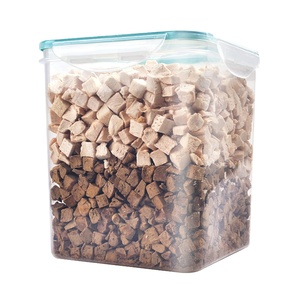
4. Freeze-Dried Raw Co-Packers
Utilizing advanced lyophilization equipment to freeze-frame live enzymes and nutrients, creating high-margin kibble toppers and pure raw puppy snacks.
5. Organic & Sustainable Specialists
Pioneering insect-protein integrations, novel ocean algae omega sources, and pasture-raised certified organic ingredients meeting strict EU Organic standards.
6. Flexible Scale Co-Manufacturers
Offering tiered MOQs for scaling start-ups, allowing pilot-run validation from 1 to 3 metric tons without sacrificing manufacturing quality.
Manufacturing Specification Standards for Commercial Puppy Diets
To ensure optimal anatomical progression during a puppy's critical first 12 months, professional contract manufacturing specifications must adhere to the following biochemical thresholds:
Product Development Trends in Puppy Nutrition (2025–2030)
Formulation science for growing canine organisms has advanced rapidly over recent years. Brands looking to gain a competitive market share must align their private label development plans with four main scientific trends:
1. Microbiome Targeted Prebiotics & Postbiotics
Modern puppy diets move beyond simple dietary fiber. Formulators now integrate specific Mannan-Oligosaccharides (MOS), Fructo-Oligosaccharides (FOS), and heat-stabilized postbiotic fermentates. These functional compounds prevent pathogenic colonization (such as E. coli and Salmonella) in immature intestinal tracts while accelerating nutrient absorption.
2. Breed-Size Specific Energy Density Control
A single generic "puppy food" is no longer acceptable in the premium market. Large-breed puppies (adult weight >25kg) require carefully regulated energy densities and lower calcium levels to avoid rapid bone growth spurs that lead to hip dysplasia. Conversely, toy and small breeds require higher metabolic energy densities and smaller, friable kibbles to prevent hypoglycemia.
Traditional high-heat extrusion can degrade delicate fats and heat-sensitive vitamins. Leading factories now utilize vacuum-assisted cold-coating technology. Post-extrusion kibble is placed under vacuum pressure to draw wholesome omega oils, natural palatants, and live probiotics deep into the kibble core, protecting them from atmospheric oxidation.
Global Procurement & Sourcing Strategy: Navigating 2025 Supply Chains
The international pet food export environment presents complex challenges including fluctuating ingredient costs, strict veterinary health checks, and freight volatility. Procurement officers must construct resilient supply chain agreements when contracting OEM/ODM services.
Supply Chain Best Practice: Diversify raw material reliance by selecting manufacturers with localized ingredient sourcing partnerships. Factories located near agricultural centers eliminate transportation lag times, securing fresher protein raw materials with lower carbon impacts.
Traceability & Batch Testing Protocols: Contract facilities must provide continuous Near-Infrared (NIR) inline testing for moisture, protein, and fat consistency alongside third-party COA (Certificate of Analysis) certification for heavy metals, mycotoxins, and enterobacteriaceae prior to inventory release.
Sustainable & Recyclable Packaging Formats: Global export compliance increasingly demands fully recyclable mono-material (PP or PE) packaging solutions to comply with EU and North American plastic reduction mandates without compromising oxygen or moisture barriers.
Container Density Optimization: Smart pallet configuration engineering increases container weight utilization by up to 18%, reducing landed cost per unit across international maritime shipping routes.
Enterprise Strengths: Why Leading Global Brands Partner With Us
As a premier British pet nutrition manufacturer, ThePetFoodPeople® delivers complete contract manufacturing, private label, and custom formulation services. Operating with uncompromised manufacturing standards, our facilities combine decades of expertise with cutting-edge plant processing.
100% British Manufacturing
Rooted in UK agricultural excellence, leveraging pristine regional ingredients, fully traceable meat meals, and trusted sustainable supply networks.
Proprietary Brand Benchmark
We design, develop, and manufacture our own successful global brand families—including Griffiths’ Dog Food®, Clydach Farm®, and Clinigol® Veterinary Science. We apply the same quality standards to your private label.
In-House Nutritionist Science
Recipes are formulated from scratch by expert animal nutritionists in accordance with FEDIAF guidelines, ensuring balanced life-stage nutrition.
Complete Export Logistics
Seamless export clearance support across Europe, the Middle East, Asia, and North America. We handle veterinary documentation, multilingual labels, and customs filing.
Frequently Asked Questions (FAQ) for B2B Procurement
What is the Minimum Order Quantity (MOQ) for private label puppy food extrusion?
Production runs are scheduled based on recipe specifications and packaging formats. Standard dry extruded kibble typically requires full batch run multiples (typically starting at 3 to 5 metric tons per recipe) to guarantee nutrient uniformity and thermal stability across the production run. Trial volumes for supplements and freeze-dried treats can be arranged for initial market validation.
How long does a complete OEM/ODM custom puppy food formulation take from brief to release?
A standard developmental cycle ranges between 8 and 16 weeks. This timeline encompasses initial nutritional modeling, raw material specification and procurement, pilot extrusion testing, laboratory analytical verification, packaging compliance reviews, and final commercial production release.
How do you ensure puppy food recipes prevent developmental orthopedic issues in large breeds?
Our animal nutritionists formulate large-breed growth diets with tightly controlled caloric densities and precise Calcium-to-Phosphorus ratios (strictly maintained between 1.1:1 and 1.3:1). Every batch undergoes laboratory testing to ensure mineral concentrations match formula specifications before warehouse clearance.
Can you manufacture specialized veterinary-grade or hypoallergenic puppy diets?
Yes. Our specialized manufacturing lines produce clinical and veterinary care formulations under strict sanitation procedures. We offer single novel protein diets (such as lamb, duck, or hydrolysed proteins) combined with grain-free carbohydrate alternatives to assist sensitive juvenile digestions.
What international export documentation and certifications do you supply?
We manage complete export documentation including Official Export Health Certificates (EHC), Certificates of Origin, Certificates of Analysis (COA), free sale certificates, and localized packaging artwork reviews for import compliance in over 20 global jurisdictions.