Direct Factory Supply for Supermarket Chains, Wholesale Distributors, Brand Owners, and Importers Worldwide
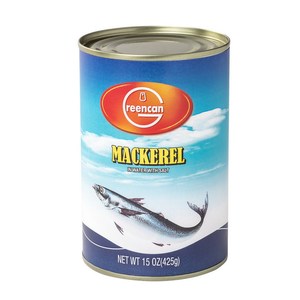
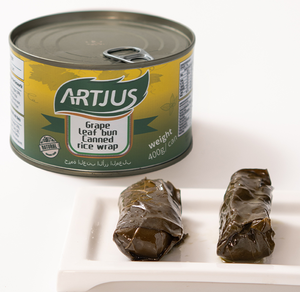
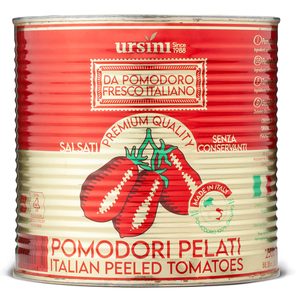
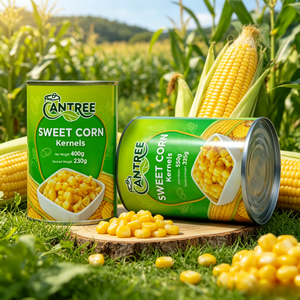
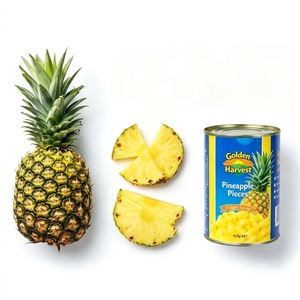
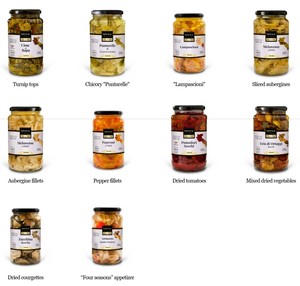
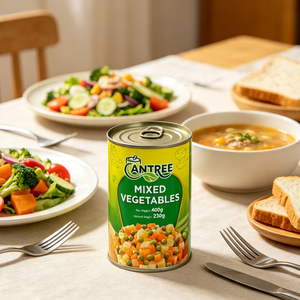
As a leading China wholesale canned food manufacturer and exporter, our industrial model is anchored in total operational integration—from direct agricultural contract farming across China's prime microclimates to high-speed, automated canning and thermal processing lines. Global supply chain leaders, brand owners, and multinational retail buyers require absolute certainty regarding microbiological safety, organoleptic consistency, and regulatory compliance. We eliminate multi-tiered supplier inefficiencies by maintaining 100% internal ownership over recipe engineering, lacquered tinplate selection, thermal retort calibration, and container shipping execution.
Our processing facilities operate under international food safety benchmarks, maintaining top-tier certifications including BRCGS Issue 9 (Grade AA), IFS Food Version 8, US FDA FCE/SID Registrations, Halal (JAKIM/MUI), Kosher (OU), and ISO 22000 / HACCP systems. Whether handling high-acid products such as Italian-style peeled whole tomatoes and pineapple chunks, or low-acid foods like sweet kernel corn, green beans, and marine proteins, our thermal process schedules are rigorously calculated using advanced F0 value thermal lethality protocols ($F_0 \ge 3.0$ minutes) to guarantee total commercial sterility against Clostridium botulinum spores while preserving maximum cellular structure, natural crispness, and nutrient retention.
Utilizing high-speed automatic seamers equipped with real-time laser optic defect sensors and non-destructive seam thickness inspection systems. Overlap %, seam rating, and countersink depth are recorded per batch to prevent micro-leakage and post-process contamination.
Direct contract cultivation covering over 50,000 hectares of GAP-certified (Good Agricultural Practices) farmland in Xinjiang, Shandong, and Fujian. Complete traceability protocols track raw crops from field planting, pesticide application logs, to factory intake within 6 hours of harvest.
In-house modern laboratory facilities fitted with High-Performance Liquid Chromatography (HPLC) and Inductively Coupled Plasma Mass Spectrometry (ICP-MS) for routine screening of heavy metals (Cadmium, Lead, Arsenic), pesticide residues, and internal lacquer migration testing.
The global trade of canned fruits, vegetables, and seafood is undergoing a structural realignment driven by stringent food safety regulations, evolving consumer preferences for clean-label formulation, and supply chain vulnerability mitigation. Professional buyers, sourcing directors, and category managers must align their 3-to-5-year procurement strategies with four critical market developments:
| Target Region | Primary Market Driver | Key Packaging Standard | Regulatory Compliance Requirement |
|---|---|---|---|
| North America (USA / Canada) | High demand for private-label sweet corn, canned fruit, and canned sardines; preference for EOE (Easy Open Ends). | BPA-NI Internal Coating, Heavy Gauge Tinplate, Retail Display Trays. | FDA FCE & SID Registration, FSMA PCQI Analysis, HACCP. |
| European Union & UK | Extreme emphasis on clean label, organic certification, sustainable sourcing, and non-GMO agricultural inputs. | Recyclable Tinplate, Light-weighting, Multi-language Lithography. | BRCGS Grade AA / IFS, EU Heavy Metal Residue Limits, Pesticide Traceability. |
| Middle East & GCC | Massive wholesale volume for stuffed grape leaves, legumes, mixed vegetables, and canned seafood. | Stackable Heavy Duty Tins, High-Temperature Storage Resistant Lacquers. | Halal Certified (MUI/JAKIM Recognized), GSO Standardization Compliance. |
| Latin America & Africa | Price-competitive bulk staples, long shelf life (36 months), high cost-performance ratio for retail distribution. | Standard Sanitary Ends, High Drained-Weight Yields, Corrugated Outer Cases. | National Health Registrations (e.g., ANVISA), Certificate of Free Sale, Phytosanitary Testing. |
The modern canned food manufacturing facility is no longer just a packing shed; it is a high-tech food engineering laboratory. To provide maximum information gain for corporate buyers evaluating manufacturing facilities in China, our site highlights the following key innovations in thermal processing, automated grading, and structural packaging engineering:
Overpressure computer-controlled retorts dynamically adjust internal vessel pressure based on can deformation sensors. This eliminates micro-buckling and strain on easy-open pull-ring seams, ensuring 100% seal security during rapid water-spray cooling cycles.
High-speed optical sorting systems analyze color, geometry, and surface blemishes on fresh diced carrots, sweet corn kernels, and peeled tomatoes at 30 tons per hour. Downstream X-ray inspection removes metallic, glass, or stone contaminants prior to filling.
Implementation of double-reduced (DR) steel tinplate allows for reduced wall thickness while increasing vertical column crush strength. This engineering upgrade reduces freight carbon footprints without compromising pallet stacking stability in 40ft high-cube containers.
By integrating these technological advancements, our manufacturing plants achieve a standard of product consistency that drastically reduces customer claims, lowers transport damages, and maintains superior aesthetic appeal on supermarket shelves globally.
Clear, direct answers to technical and commercial questions commonly raised by international procurement managers and import directors:
For standard canned products (such as 400g canned sweet corn, 400g mixed vegetables, or 425g canned sardines) using stock tin dimensions, our standard MOQ is typically one 20-foot full container load (FCL) per product category (approx. 1,800 to 2,200 cartons depending on packaging). For fully custom lithographed cans requiring customized artwork printing directly onto the metal, the minimum run is generally 50,000 to 100,000 cans per design to optimize metal printing press runs.
Our manufacturing plants are fully registered with the US FDA under established Food Canning Establishment (FCE) numbers. Every low-acid product line (canned vegetables, marine proteins) and acidified food line (canned fruits, marinated artichokes) has registered Schedule Process documentation and valid Submission Identifier (SID) numbers. We provide complete SID verification documents along with commercial export manifests to guarantee seamless US Customs and FDA import entry clearance.
We adhere strictly to international double seam metallurgical standards. Online seamers undergo automated checking every 30 minutes. Every 2 hours, seam destruction teardowns measure Overlap Length (≥1.1mm), Seam Percent Overlap (≥55%), Countersink Depth, Body Hook, Cover Hook, and Wrinkle Rating (≤20% rating). All data points are archived per lot number for complete legal QA traceability.
Yes. We offer a complete range of certified BPA-NI internal tinplate coatings, including organosol, polyester, and modified acrylic lacquers. These lacquers are formulated specifically to match product aggressiveness—for instance, acid-resistant lacquers for tomatoes and pineapples, and sulfur-resistant organosol coatings for high-protein seafood and legumes, fully compliant with EU and California Proposition 65 requirements.
Drained weight is a core contract specification. For example, our canned sweet corn 400g net weight cans maintain a guaranteed drained weight of ≥60% (240g+), while our 2.5kg peeled tomatoes adhere to strict international food service standards. Drained weight testing is conducted on hot-fill lines, post-retort cooling, and after a mandatory 14-day incubation holding period prior to final shipping release.
Our canned food products carry a validated commercial shelf life of 24 to 36 months depending on media type and packaging format. Accelerated shelf-life testing (incubated at 37°C and 45°C for 90 days), chemical migration testing, organoleptic degradation monitoring, and vacuum decay testing reports are available to support registration in destination market health departments.
We offer FOB China (Ningbo, Qingdao, Xiamen, Shenzhen), CFR, and CIF shipping terms to any major destination port globally. Our logistics department utilizes automated container load software to optimize pallet configurations and master carton dimensions—maximizing weight loading limits (up to 26-28 Metric Tons per 20ft container depending on port weight allowances) to minimize ocean freight costs per unit for our buyers.
Streamline your food sourcing supply chain with factory-direct pricing, certified microbiological quality assurance, and expert OEM/ODM private label execution. Contact our technical sales team today to request instant product specifications, factory audit access, or custom quote samples.

