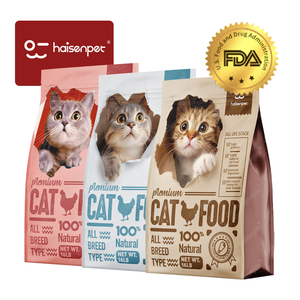
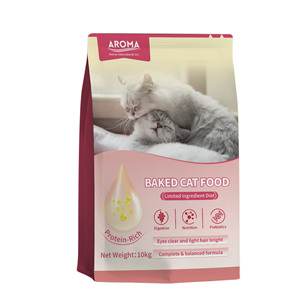
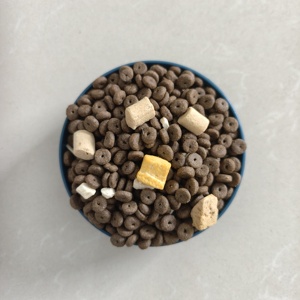
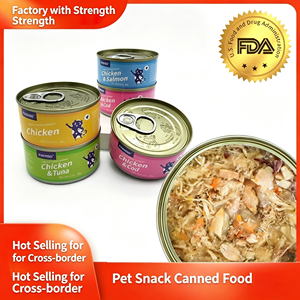
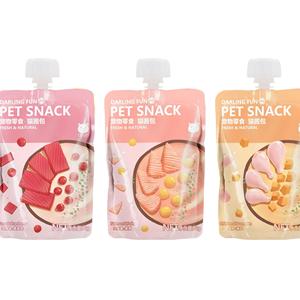
Directly manufactured from certified facilities adhering to FDA, BRCGS, ISO22000, and FEDIAF standards. Engineered for maximum market penetration.
The global pet care ecosystem has undergone a fundamental structural paradigm shift. No longer viewed as secondary agricultural processing hubs, elite Chinese pet treat factories and exporters have transitioned into high-tech, bio-nutritional processing powerhouses. Driven by stringent global regulatory mandates, rapid technological integration, and massive upstream supply chain verticalization, China now sits at the epicenter of private label pet food innovation.
For international brand owners, commercial procurement directors, retail conglomerates, and veterinary networks, navigating the landscape of China top dog treats factories and exporters requires an analytical approach grounded in verifiable manufacturing metrics, biosecurity protocols, formulation technology, and regulatory compliance. Modern sourcing is no longer merely about acquiring lowest-cost kibble or raw jerky; it is about securing a resilient, agile, and technically superior contract manufacturing partner capable of fulfilling human-grade standards.
As consumer demand for humanization, ultra-premium single-ingredient treats, and clean-label functional formulations surges across North America, Europe, the Middle East, and Asia-Pacific, top-tier Chinese manufacturers provide unparalleled unit economics, scalable production runs, and rapid R&D cycles. This whitepaper serves as a definitive operational framework for global procurement decision-makers seeking to optimize their supply chains through strategic ODM/OEM partnerships in China.
Building competitive differentiation in the pet treat industry requires absolute control over raw material sourcing, thermal processing variables, microbial stabilization, and packaging barrier properties. Top Chinese manufacturing enterprise infrastructures match the rigorous production standards traditionally reserved for human food processing.
Implementation of double-pass Metal Detection, X-Ray Contaminant Inspection, and strict Environmental Monitoring Programs (EMP) ensuring zero Salmonella, Listeria, or E. coli risk across finished batches.
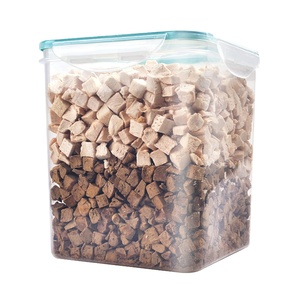
Industrial multi-ton vacuum freeze-drying chambers ($FD$) that preserve delicate heat-sensitive enzymes, vital proteins, natural aromas, and cellular structures without chemical preservatives.
In-house PhD veterinary nutritionists utilizing animal science research to optimize metabolizable energy ($ME$), amino acid bioavailability, and omega-3/6 essential fatty acid ratios.
A primary structural advantage of partnering with premier Chinese exporters lies in localized, closed-loop raw material procurement. Direct integration with GACC (General Administration of Customs of China) registered slaughterhouses and oceanic fisheries guarantees seamless end-to-end batch traceability ($FTIN$). Raw proteins—including free-range chicken, deep-sea salmon, grass-fed beef, and duck—undergo immediate cold-chain transport at $-18^\circ\text{C}$ directly to processing facilities within 4 hours of harvest.
| Processing Method | Key Technical Metrics | Primary Finished Formats | Target Health Benefit |
|---|---|---|---|
| Sub-Zero Freeze Dried (FD) | Moisture < 3.0%, Water Activity ($a_w$) < 0.30 | Pure Raw Cubes, Minces, Toppers | Maximum nutrient retention, high palatability |
| High-Pressure Retort (Wet) | $F_0$ Sterilization Value ≥ 6.0, 121.1°C | Pouches, Cans, Lickable Sachets | Optimal hydration, gentle digestion |
| Hot-Air Dehydration | Temperature controlled 65°C - 75°C, 12+ hrs | Jerky Strips, Rawhide Alternatives | Long chew time, dental tartar removal |
| Precision Extrusion | Shear stress thermal cooking, $SME$ tuning | Functional Kibble, Dental Bones | Targeted release of bio-actives & vitamins |
Evaluating macro-market trends is critical for brand managers aiming to capture multi-year retail market share. Over the next decade, global procurement strategies in the dog treat category will be dictated by three primary macro forces: functionalization, sustainability, and absolute supply integrity.
Treats are no longer viewed by pet parents merely as behavioral rewards; they serve as daily delivery vectors for preventive healthcare. B2B buyers are shifting SKUs toward multi-functional claim sets. Key active ingredients currently driving high-margin market growth include:
The elimination of artificial binders, synthetic antioxidants (such as BHA, BHT, or Ethoxyquin), modified corn starches, and ambiguous "animal derivatives" is non-negotiable. Modern global consumers demand short, transparent ingredient panels containing named, single-source animal proteins, whole fruits, and natural antioxidants (Tocopherols, Rosemary Extract).
Global retail buyers are held to increasingly strict ESG (Environmental, Social, and Governance) targets. Top Chinese factories are responding by implementing solar-assisted plant operations, closed-loop water filtration systems, and offering fully recyclable mono-material packaging solutions (PE/PE or PP/PP high-barrier pouches) that maintain oxygen permeability rates ($OTR < 1.0 \text{ cc/m}^2/\text{day}$) without compromising shelf-life stability.
Navigating cross-border pet food sourcing mandates strict adherence to international food safety legislation. Importing pet treats from China into North American, European, or Australasian jurisdictions requires comprehensive documentation and rigorous operational validation.
Facilitating VQIP (Voluntary Qualified Importer Program) readiness, FSVP (Foreign Supplier Verification Programs) audit documentation, and full adherence to FSMA (Food Safety Modernization Act) rules.
Full compliance regarding animal by-products not intended for human consumption, certified by TRACES (Trade Control and Expert System) and local veterinary authorities.
Facilities maintaining active Grade AA BRCGS (British Retail Consortium Global Standards), IFS Food, and FSSC 22000 operational certifications for zero-defect production management.
A structured ODM development cycle ensures seamless scaling from benchtop formulation to full-scale commercial production runs:
Answers to crucial technical, logistical, and commercial inquiries routinely posed by corporate buyers and supply chain executives.
Partner with an elite contract manufacturer offering state-of-the-art facilities, certified biosecurity standards, and competitive enterprise pricing. Request your custom formulation consultation today.
Send an Inquiry