Executive Technical Report: The Science & Engineering of Bio-Mechanical Dental Chews
In modern oral healthcare and specialized pet nutrition, the demand for high-efficacy, non-invasive oral hygiene mechanisms has driven rapid engineering advancements in dental chew manufacturing. As a premier CE Certified Dental Chews Manufacturer & Exporters facility, our industrial capabilities span across dual-spectrum categories: medical-grade polymer orthodontic aligner seating chewies for human dental care, and biomechanically extruded, nutrient-dense dental chews for veterinary applications.
Periodontal pathology and aligner displacement represent two major structural challenges in their respective health disciplines. Human orthodontic therapy utilizing clear aligners (such as Invisalign) requires continuous, uniform force application to ensure full mechanical seating of aligner trays over clinical attachments. Insufficient seating leads to tracking errors, prolonged treatment durations, and sub-optimal tooth movement. Conversely, companion animal oral care faces systemic challenges with calculus deposition and plaque bio-films, where 80% of canine subjects exhibit signs of periodontal disease by age three.
Our research and development engineering framework bridges these domains through advanced material science, controlled elasticity modeling, and bio-active delivery matrix formulation. By manufacturing under strict ISO 13485 (Medical Devices) and ISO 22000 / GMP standards, our manufacturing units deliver export-ready products that rigorously satisfy European CE directive parameters, US FDA medical/food-grade standards, and international consumer safety laws.
Global B2B Market Intelligence: Procurement Trends in Dental Chews (2025–2030)
Global procurement teams, hospital supply networks, private label brand owners, and veterinary pharmaceutical distributors are shifting their sourcing criteria from low-cost commodities toward high-value, scientifically backed OEM/ODM partners. Understanding these market dynamics is critical for brand equity, regulatory compliance, and consumer retention.
1. Transition to Eco-Friendly & Hypoallergenic Polymers
In human orthodontic chewies, procurement tenders increasingly mandate bisphenol A (BPA)-free, phthalate-free, and medical-grade platinum-cured silicone matrices. Furthermore, environmental mandates across the EU and North America favor eco-friendly, recyclable, or food-grade thermoplastic elastomers (TPE) over traditional low-tier vulcanized rubbers. In animal health, clean-label, grain-free, single-protein, and high-calcium yak casein matrices are rapidly outperforming synthetic starch chews.
2. Clinical Verification and Mechanical Plaque Abrasion Metrics
B2B buyers no longer accept passive product claims. Procurement specifications now mandate measurable dynamic torque resistance, fracture toughness, and texture friction coefficients. Dental chews must demonstrate enzymatic solubilization of plaque matrices or precise mechanical abrasion kinetics that scrape gingival margins without causing micro-lesions in enamel or soft tissue.
3. Customized Sensory & Flavor Engineering
Patient compliance in orthodontic seating directly correlates with tactile feedback and flavor profiles. Modern product lines integrate encapsulated sour fruit notes, refreshing menthol extracts, or diagnostic plaque-indicating dyes that visually highlight areas of oral bacteria buildup. In pet care, natural palatants derived from real meat marrow or Himalayan yak milk boost sustained chewing duration, maximizing plaque-scraping contact time.
| Procurement Dimension |
Legacy Sourcing Model |
Next-Gen Engineering Model (2025+) |
Impact on B2B Buyers |
| Raw Material Origin |
Industrial Synthetic Vulcanized Rubber / High Starch |
Platinum-Cured Medical Silicone / Pure Yak Milk Casein |
Eliminates allergen liability; satisfies strict EU CE regulatory audits. |
| Quality Standards |
Basic ISO 9001 Factory Quality Control |
ISO 13485 (Medical) & ISO 22000 Cleanroom Manufacturing |
Guarantees batch-to-batch consistency and zero cross-contamination. |
| Diagnostic Capability |
Passive Mechanical Abrasion Only |
Enzymatic Plaque-Revealing Dye Integration |
Creates dynamic market differentiation for private-label brands. |
| Supply Chain Traceability |
Paper-Based Manual Verification |
Fully Digitized NIR Spectroscopy & Lot Tracking |
Enables rapid export clearance and 100% regulatory compliance. |
Technological Innovations & Formulation Architecture
Achieving superior performance across orthodontic seating chewies and long-lasting pet dental treats requires divergent, highly specialized chemical and physical engineering pathways.
Medical Silicone Engineering
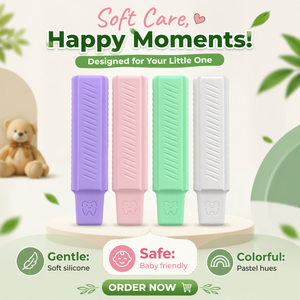
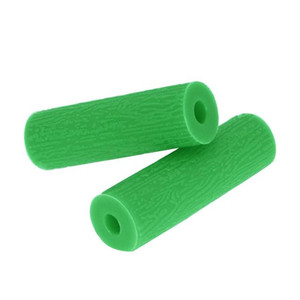
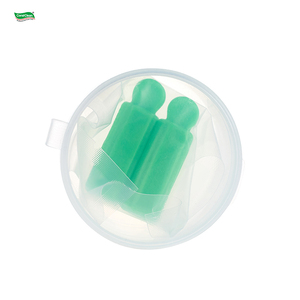
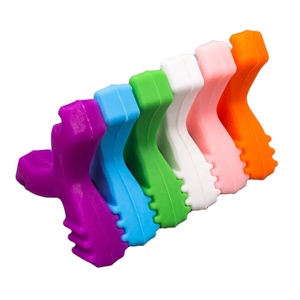
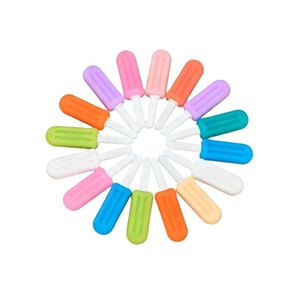
For invisible aligner chewies (e.g., Smilestar & CoralClean ranges), high-consistency platinum silicone rubber (HCR) is injection-molded under Class 100,000 cleanroom conditions. The molecular cross-linking density is calibrated to provide an optimal Shore A hardness (30 to 50 Shore A). This elasticity range exerts sufficient hydraulic pressure to seat aligner trays snugly over brackets without structural fatigue or bite-through tearing.
Diagnostic Bio-Indicator Tablets
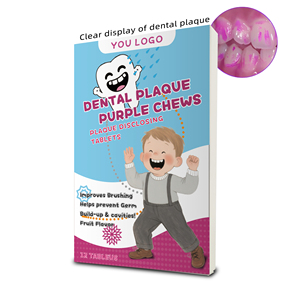
Utilizing food-grade erythroshingosine or FDA-approved colorimetric indicator agents, chewable plaque tablets selectively stain bacterial biofilms on enamel surfaces. When chewed, the tablet hydrolyzes plaque polysaccharides, coloring anaerobic bacterial colonies in bright magenta or blue hues. This provides instantaneous visual feedback for pediatric and adult dental hygiene protocols.
Dense Collagen Casein Cross-Linking
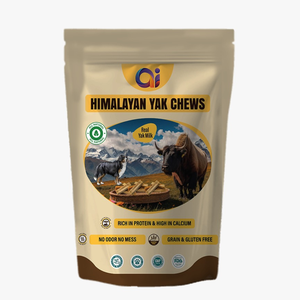
Himalayan Yak cheese dog chews and real bone marrow chew products employ high-density thermal compaction and sun-curing dehydration. Milk proteins (casein) undergo slow moisture extraction down to <9.5%, creating a dense micro-crystalline protein lattice. As dogs gnaw, saliva softens the exterior layers, shedding microscopic fibers that scrape tartar mechanically without splintering or causing gastrointestinal blockages.
Enterprise Capabilities: Why Global Importers Choose Our Production Lines
As an established British and international manufacturing conglomerate, our technical facility operates as a centralized hub for custom formulation, private label artwork compliance, export certification, and scalable batch extrusion. Every line item we manufacture reflects decades of engineering precision and rigorous regulatory adherence.
1. Comprehensive CE Certification & Regulatory Dossier Support
Navigating global import regulations requires foolproof documentation. We provide full technical dossiers for all OEM products, including CE Declaration of Conformity (DoC), REACH chemical safety testing, EU Regulation (EC) No 1935/2004 compliance for food-contact materials, and FDA 21 CFR 177.2600 certification for rubber/silicone articles. Our dedicated legal compliance team reviews multilingual packaging artwork to ensure complete regulatory alignment across the EU, UK, US, Middle East, and Asia-Pacific territories.
2. Precision Custom Injection Molding & Dual-Extrusion Technology
Whether molding custom ergonomic handles for aligner tray seaters or extruding multi-layer dual-texture dental treats with active enzymatic cores (such as sodium hexametaphosphate for calcium chelation), our plant operates state-of-the-art machinery. We support custom shape tooling, engraved brand logos, bespoke flavor infusion, and flexible packaging (blister packing, eco-pouches, point-of-sale display cartons).
3. Strict Quality Assurance & Analytical Verification
Quality assurance is embedded into every operational stage. Raw materials undergo Near-Infrared (NIR) spectroscopic identity testing upon intake. In-process camera vision systems check dimensions, molding flash, and color variance in real time. Prior to batch release, finished goods are subjected to microbial testing (Salmonella, E. coli, Listeria), heavy metal screening via ICP-MS, and physical mechanical stress testing to ensure total product safety and structural integrity.
Strategic B2B Procurement FAQ
Essential operational, regulatory, and logistics intelligence for enterprise purchasing departments.
What regulatory documentation is provided for international CE export clearance?
+
We furnish a complete technical dossier with every commercial shipment. This includes the official CE Declaration of Conformity (DoC), ISO 13485 / ISO 22000 certificate copies, material safety data sheets (MSDS), REACH & RoHS testing reports, heavy metal analysis, and official Certificate of Free Sale (CFS) for rapid customs release in destination ports.
What is the standard Minimum Order Quantity (MOQ) for custom private label manufacturing?
+
MOQs are structured based on product category. Standard silicone aligner chewies in stock shapes with custom blister artwork begin at 2,000 to 5,000 packs. Fully customized molded shapes or proprietary extruded dental treat formulations typically require 10,000+ units to justify tooling setup and raw material extrusion runs. Trial volume runs are available for market testing under specific framework agreements.
How do you ensure shelf-life stability and flavor retention in soft/hard dental chews?
+
Our food products maintain a standard 18-to-24-month shelf life. We achieve this through precise water activity (aW) control (<0.65), micro-encapsulation of sensitive flavor compounds, and high-barrier nitrogen-purged multi-layer foil packaging. Accelerated shelf-life testing data is conducted on every batch under incubator conditions (40°C / 75% RH).
Can your facility produce custom shapes, colors, and proprietary flavor profiles?
+
Yes. Our engineering department handles end-to-end tooling development. We can create 3D CAD prototypes within 72 hours and produce physical steel/aluminum molds within 15 days. Custom pantone color matching, fruit/mint flavor systems for humans, or savory meat/cheese flavor matrices for pets are engineered in-house.
What lead times can procurement teams expect from contract sign-off to delivery?
+
For re-orders of established SKUs, production lead times average 2 to 3 weeks. For new custom OEM formulations, the cycle takes 6 to 10 weeks: 2 weeks for CAD modeling and sample sign-off, 3 weeks for mold fabrication/pilot batching, and 3 weeks for full commercial extrusion, packaging, and QA release.