The global pet food sector is becoming more technical, traceable, and quality-driven. APPA’s 2024 State of the Industry report valued United States pet industry spending at approximately $147 billion in 2023. FEDIAF’s 2024 Facts and Figures report recorded about 299 million pets across Europe. It also reported roughly €29.2 billion in European pet food sales. These figures reveal strong demand. They also expose growing pressure on suppliers.
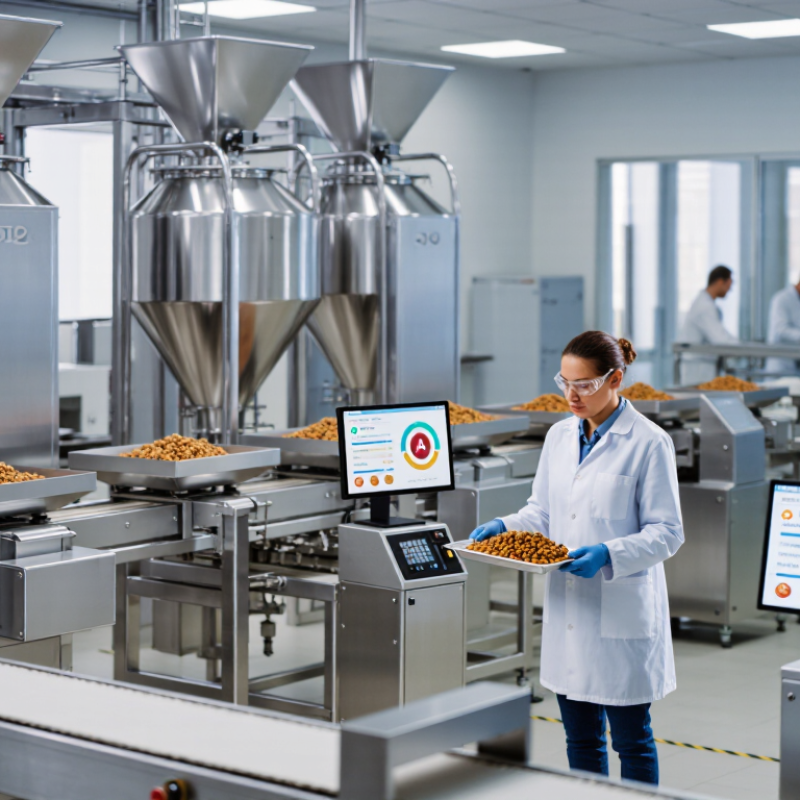
End-to-End Pet Food Production now covers more than mixing and packing. Leading suppliers support ingredient sourcing, nutritional formulation, extrusion, wet-food cooking, drying, packaging, laboratory testing, and logistics. A modern facility may move poultry meal through stainless-steel conveyors, monitor moisture during extrusion, and print a batch code within seconds. This connected approach can improve consistency and recall readiness. It can also reduce handoffs between contractors.
Yet no supplier is perfect. Some companies excel in equipment but lack formulation depth. Others provide attractive recipes without transparent sourcing evidence. Therefore, this guide evaluates global suppliers through practical criteria, including certifications, quality systems, production capacity, traceability, technical support, and regional service. The assessment references recognized industry expectations, including FEDIAF nutritional guidance, AAFCO standards, and ISO-based food safety practices. Certifications alone do not prove dependable performance. Audit results, batch records, factory experience, and customer references matter more. Supplier websites may also present selective information. Buyers should verify claims directly.
This overview is designed for manufacturers, brand owners, and investors comparing complete production partners. It highlights companies capable of connecting science, machinery, compliance, and commercial execution. The strongest partner is not always the largest. It is the supplier that can deliver safe, consistent, and scalable products under real operating conditions.
Global pet ownership is reshaping food manufacturing. More than 600 million dogs and 470 million cats live worldwide, according to broad industry estimates. These figures are not perfectly consistent. Survey methods, informal ownership, and regional reporting can change the totals.
This demand requires more than large factories. Reliable suppliers connect ingredient sourcing, formulation, cooking, drying, packaging, and logistics. Each stage needs documented controls. Nutrition specialists should balance protein, fat, fiber, minerals, and energy for different animal life stages. Production teams must monitor moisture, temperature, batch identity, and contamination risks.
Traceability matters. A supplier should show where ingredients came from and how each batch was tested. Clear records help manufacturers investigate quality concerns quickly. They also support responsible purchasing decisions across international markets. From practical experience, small process gaps can create major delays. A missing label check or incomplete transport record may affect an entire shipment.
Demand is also becoming more specific. Owners increasingly seek age-focused, breed-aware, and sensitive-diet options. This creates pressure for flexible production lines and smaller batch sizes. Yet customization can increase waste and complicate forecasting. Suppliers need accurate demand data, realistic capacity planning, and honest communication when a specification cannot be met. The market is growing, but growth alone does not guarantee dependable pet nutrition.
End-to-end pet food production begins with disciplined ingredient sourcing. Suppliers typically assess farms, fisheries, grain processors, and animal nutrition facilities before approval. Each ingredient should carry origin records, batch codes, and storage requirements. A useful supplier map follows materials from the loading dock to the finished product.
Quality teams test incoming ingredients for moisture, nutrients, contaminants, and freshness. They also review supplier audits and transport conditions. Corn, meat meals, oils, and vitamin premixes may arrive through different routes. That creates weak points. A delayed truck can affect production schedules and storage capacity.
Inside the plant, controlled weighing supports accurate formulas. Mixing, cooking, drying, and cooling each require documented checks. Operators should monitor temperature, residence time, and moisture levels. Small variations matter. A practical traceability system links every production batch with its ingredients and test results. Packaging then protects the product from oxygen, light, humidity, and handling damage. Sealed bags, clear labels, and readable lot codes support retailers and consumers.
End-to-end suppliers also coordinate warehousing, export documents, and regional distribution. Pallets need stable stacking and suitable warehouse conditions. Quality does not end at the factory gate. Transport records can reveal exposure to heat or moisture. No supply chain is perfect. Records may be incomplete, and supplier maps can become outdated. Regular verification, corrective actions, and honest review keep the system dependable.
Top End to End Pet Food Production Suppliers Worldwide
Supplier quality is not measured by equipment alone. It is measured by repeatable control from raw material approval to sealed shipment. Strong suppliers document ingredient origins, lot numbers, storage temperatures, and production changes. A missing record can weaken an otherwise impressive facility.
FEDIAF nutritional guidelines help suppliers formulate complete and balanced pet food for European markets. AAFCO model profiles support nutritional adequacy claims in the United States. FDA requirements add controls for sanitary processing, ingredient safety, labeling, and preventive systems. These frameworks are related, but they are not interchangeable. Experienced suppliers map each recipe against the target market before production begins.
On the factory floor, reliable benchmarks include calibrated scales, validated mixing times, pathogen monitoring, and retained samples from every lot. Laboratory results should support moisture, protein, fat, minerals, and microbiological specifications. Supplier audits should also examine pest control, employee hygiene, allergen handling, and corrective-action records. Small details matter.
Traceability must work under pressure. A plant should identify affected materials quickly, not after several confusing calls. Yet no system is perfect. Testing frequency may vary, and risk assessments can become outdated when formulations change. Independent reviews, transparent documentation, and practical staff training expose these weaknesses earlier. Quality is not a certificate on a wall. It is a daily habit, checked against evidence.
| Benchmark Dimension | Applicable Framework | Supplier Quality Benchmark | Objective Evidence to Request | Recommended Acceptance Criterion |
|---|---|---|---|---|
| Regulatory Status and Market Scope | FEDIAF / AAFCO / FDA | The supplier identifies the destination market, product category, species, life stage, and applicable legal requirements before production. | Regulatory applicability matrix, product specification, market-registration records where required, and documented regulatory review. | 100% of active products have an approved market-specific compliance assessment before commercial release. |
| Facility Good Manufacturing Practices | FDA FEDIAF | The facility operates documented hygiene, sanitation, pest-control, personnel-training, equipment-maintenance, and environmental-control programs. | Current GMP or hygiene certification, sanitation standard operating procedures, training records, internal-audit reports, and corrective-action logs. | No unresolved critical hygiene findings; corrective actions are risk-assessed, assigned, and closed within documented due dates. |
| Food Safety Plan and Hazard Analysis | FDA FEDIAF | The supplier maintains a written hazard analysis covering biological, chemical, physical, and radiological hazards where relevant, with preventive controls and verification activities. | Signed hazard analysis, preventive-control plans, process-flow diagrams, monitoring records, verification results, and corrective-action procedures. | Every significant hazard has a documented control, monitoring method, responsible person, action limit, verification activity, and record-retention requirement. |
| Ingredient Approval and Supplier Control | FEDIAF AAFCO FDA | Ingredients are legally permitted for the intended market and are purchased only from approved sources with defined specifications. | Approved-supplier list, ingredient specifications, certificates of analysis, allergen declarations, country-of-origin records, and supplier-audit results. | 100% of ingredients are approved against identity, purity, safety, compositional, and legal-use criteria before receipt or use. |
| Nutritional Adequacy | FEDIAF AAFCO | Complete diets are formulated to meet the applicable nutrient profile for the declared species and life stage; complementary products are clearly identified as such. | Formulation calculations, nutrient-profile comparison, digestibility or energy assumptions, laboratory results, feeding-trial records where used, and qualified-nutritionist approval. | All required nutrients meet the applicable FEDIAF or AAFCO profile after considering nutrient variability, processing losses, and analytical uncertainty. |
| Product Formulation and Change Control | All Frameworks | Formula, process, packaging, ingredient, and supplier changes are evaluated for nutritional, safety, legal, shelf-life, and labeling impact before implementation. | Change-control procedure, risk assessment, approved formula versions, trial-batch records, and regulatory sign-off. | No material change is implemented without documented approval, validation or verification, and updated specifications where necessary. |
| Microbiological Safety | FDA FEDIAF | The supplier controls pathogens through validated thermal processing, moisture control, hygienic handling, environmental monitoring, and finished-product testing as justified by risk. | Thermal-process validation, water-activity or moisture records, environmental-monitoring plan, pathogen results, sanitation verification, and release records. | Results comply with applicable legal, customer, and internal specifications; any pathogen-positive or out-of-specification result triggers documented investigation and disposition. |
| Chemical Contaminants and Residues | FEDIAF FDA | The control program addresses relevant risks such as mycotoxins, heavy metals, pesticide residues, veterinary-drug residues, environmental contaminants, and process-related contaminants. | Risk-based testing plan, laboratory reports, sampling procedures, contaminant limits, trend analysis, and supplier corrective-action records. | Testing frequency is risk-based and results remain within applicable legal limits or approved internal specifications, whichever is stricter. |
| Laboratory Competence | All Frameworks | Testing is performed by competent internal laboratories or qualified external laboratories using validated or recognized methods. | Laboratory accreditation or competency records, method validation, proficiency-testing results, calibration certificates, and chain-of-custody documentation. | Critical safety tests use methods suitable for the matrix and hazard, with traceable equipment calibration and documented sample integrity. |
| Process Controls and Batch Consistency | FDA FEDIAF | Critical process parameters are defined, monitored, recorded, and reviewed for extrusion, baking, canning, drying, mixing, filling, and packaging operations as applicable. | Batch manufacturing records, process-monitoring charts, metal-detector or foreign-material checks, rework controls, deviation reports, and release authorization. | Every commercial batch is fully traceable to process records and is released only after required checks and quality review are complete. |
| Packaging and Shelf-Life | All Frameworks | Packaging protects the product from moisture, oxygen, light, physical damage, and contamination throughout the declared shelf life. | Packaging specifications, seal-integrity results, migration or compatibility assessments where relevant, accelerated or real-time stability data, and storage-condition studies. | Product remains safe, legally compliant, and within agreed nutritional and sensory specifications through the complete stated shelf life. |
| Labeling and Claims | AAFCO FEDIAF FDA | Labels accurately identify the product, intended species and life stage, net quantity, ingredients, nutritional information, feeding guidance, responsible party, lot code, and required warnings. | Approved label proofs, label-compliance checklist, nutrient declaration calculations, claim substantiation, translation review, and change-control records. | 100% of production labels are approved for the destination market and match the released formulation and packaging specification. |
| Traceability and Recall Readiness | FDA FEDIAF | The supplier can trace one step backward to ingredients and one step forward to customers or distribution points, with effective lot identification. | Traceability procedure, mock-recall report, lot genealogy, distribution records, customer-notification procedure, and recall-team contact list. | A documented mock recall demonstrates retrieval of affected lots and key distribution information within the supplier’s defined emergency target time. |
| Nonconformance and Corrective Action | All Frameworks | Deviations, complaints, laboratory failures, audit findings, and product incidents are investigated using documented root-cause and risk-based corrective-action methods. | Nonconformance reports, root-cause analysis, corrective and preventive action records, effectiveness checks, and complaint-trend reviews. | Critical issues receive immediate containment; repeat issues trigger documented escalation, effectiveness verification, and management review. |
| Supplier Audit and Management Review | All Frameworks | The supplier conducts routine internal audits and permits appropriate customer or independent audits based on product risk and performance history. | Audit schedule, audit reports, grading methodology, corrective-action closure data, management-review minutes, and quality-performance dashboard. | Audit frequency is risk-based; critical findings are closed and verified before unrestricted continuation of supply. |
| Record Retention and Data Integrity | FDA All Frameworks | Quality, safety, production, laboratory, traceability, and training records are legible, attributable, protected from unauthorized change, and retrievable. | Record-control procedure, electronic-system access controls, backup records, retention schedule, audit trails, and document-revision history. | Records are complete, contemporaneous, retrievable, and retained for at least the applicable legal period or the customer-agreed period, whichever is longer. |
Europe remains a strong base for integrated pet food production suppliers. Many facilities connect ingredient sourcing, formulation, extrusion, drying, coating, and final packing. Plants often emphasize documented quality systems and detailed batch traceability. Buyers should inspect allergen controls, water treatment, and storage conditions on site. A clean showroom proves little.
North American suppliers commonly offer large-scale production and flexible private-label capacity. Their strengths may include automated filling lines, rapid product changeovers, and integrated testing laboratories. In Asia-Pacific, investment is expanding across dry food, wet food, treats, and functional nutrition. Regional suppliers can provide competitive logistics near growing consumer markets. However, standards and audit depth may differ between facilities. A supplier can look advanced on paper yet struggle with consistent moisture control. That matters when shipments cross humid climates. Independent laboratory testing, retained samples, and clear recall procedures improve confidence. Buyers should compare lead times, minimum order quantities, energy use, and technical support. Price alone is a weak measure. Some factories also need stronger communication during formula changes, which can delay approval. Careful audits, trial batches, and transparent documentation reveal more than polished presentations.
Selecting an end-to-end pet food supplier requires more than checking annual tonnage. Capacity is not output. Ask for monthly production records, line utilization, changeover time, and backup equipment. A reliable plant should trace one finished bag to its ingredient lot, silo, operator, and laboratory result. Test the system with a mock recall. Paperwork is not proof.
Certification offers useful structure, but it does not replace judgment. The ISO Survey 2023 recorded more than 77,000 ISO 22000 certificates worldwide, yet certificates apply to defined sites and scopes. Buyers should verify expiry dates, audit findings, corrective actions, and product coverage. HACCP controls, allergen segregation, pathogen testing, and foreign-material detection deserve direct evidence. A polished certificate can still hide weak daily discipline.
Sustainability must be measured per tonne of finished food. Request energy, water, packaging, waste, and emissions data, including calculation boundaries. FAO reported that agrifood systems produced 16.5 billion tonnes of carbon dioxide equivalent in 2021, representing about 31% of global human-caused emissions. Suppliers should disclose feedstock risks and transport assumptions. Renewable electricity helps, but it is not the whole answer. Some data may remain estimated. That is acceptable when assumptions are visible, reviewed, and improved.
Inspect allergen controls, water treatment, storage areas, and batch records. A clean showroom proves little. Check daily operations.
European facilities often integrate sourcing, formulation, processing, and packing. North American plants may provide scale and flexible private-label production. Asia-Pacific suppliers can offer competitive logistics near growing markets.
Request monthly production records, line utilization, changeover times, and backup equipment details. Capacity is not output. Numbers may mislead.
One finished bag should connect to its ingredient lot, silo, operator, and laboratory result. Run a mock recall. Paperwork is not proof.
No. Verify expiry dates, audit findings, corrective actions, and covered products. Check allergen separation, pathogen testing, and foreign-material controls. Daily discipline still matters.
Request energy, water, packaging, waste, and emissions data per tonne of finished food. Confirm calculation boundaries. Estimates are acceptable when assumptions remain visible.
Moisture variation can affect food quality, especially across humid climates. Request retained samples and independent laboratory tests. Small gaps may matter.
Compare lead times, minimum order quantities, energy use, and technical support. Review formula-change communication. Trial batches reveal more than polished presentations. Price alone is weak.
The global pet food industry is expanding rapidly, supported by more than 600 million dogs and 470 million cats worldwide. This article explores End-to-End Pet Food Production, covering every stage from responsible ingredient sourcing and formulation to processing, quality control, packaging, and distribution. It explains how an integrated supply chain helps manufacturers maintain product consistency, safety, efficiency, and reliable delivery across international markets.
The article also examines supplier quality benchmarks aligned with FEDIAF, AAFCO, and FDA requirements, while comparing leading production regions across Europe, North America, and Asia-Pacific. Key evaluation factors include manufacturing capacity, ingredient traceability, sustainability practices, food safety systems, and recognized certifications. By considering these criteria together, pet food companies can identify dependable production partners capable of supporting changing consumer expectations, regional compliance needs, and long-term business growth.