Choosing among the Top Contract Pet Supplement Packaging Manufacturers means looking beyond polished product photos. The right partner should understand powders, soft chews, capsules, and the packaging needs each format brings. A resealable pouch, for example, must close cleanly after repeated use. A bottle may need room for a scoop, clear lot coding, and a label that stays legible. Small details matter.
Contract Pet Supplement Packing can support consistent production, but capabilities vary by facility. Ask how teams manage ingredient handling, line changeovers, seal checks, and batch records. Request details on packaging materials, moisture barriers, and available quality checks. Then compare answers against your product’s actual needs. Clear documentation helps, too. It makes questions easier to resolve before a production run begins.
A strong manufacturer should explain its process without promising perfection. No checklist catches everything. That is worth remembering. Samples and production trials can reveal issues that a sales sheet may miss, such as a difficult-to-open seal or powder collecting near the zipper. Verify relevant qualifications and requirements directly, since these differ by product and market. The sections ahead explore how to assess manufacturers, compare services, and ask sharper questions. The goal is not simply finding the largest supplier. It is finding a dependable partner whose equipment, communication, and quality practices fit your product.
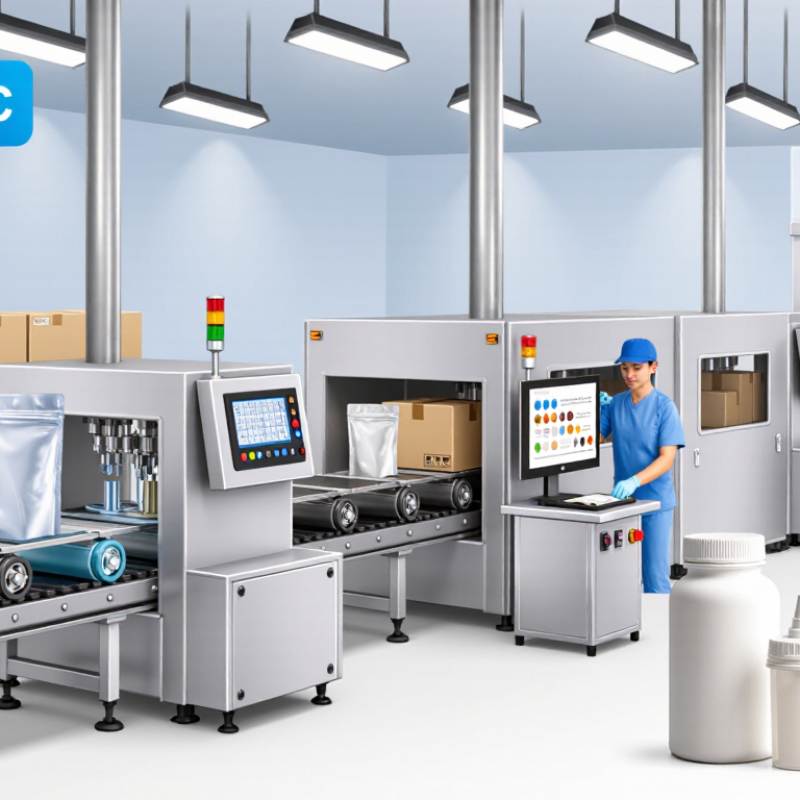
Contract pet supplement packaging manufacturers prepare products for filling, sealing, labeling, and shipment. They work with the product owner to select containers, closures, and materials suited to the product. A powder may need a wide-mouth jar and a scoop. Chews often use pouches or bottles that help keep moisture out. Liquid supplements need compatible containers and secure caps to reduce leaks. Small details matter.
Manufacturers may also handle weighing, filling, lot coding, label placement, and packing cartons for transport. They check fill amounts, seal integrity, and printed information during production. Records can help connect a finished batch with its packaging materials and production date. The exact checks depend on the product and the agreed specifications. No package is perfect. A design that looks neat on a sample may be awkward to open or difficult to fill at scale. Test runs can reveal these problems before larger production begins. It is easy to underestimate that step. Clear communication about quantities, timelines, and quality checks helps prevent avoidable delays.
Contract pet supplement packaging must match the product’s texture, dose, and handling needs. Jars suit chews and powders, while resealable pouches reduce shelf space for lightweight refills. Stick packs support single servings; liquid supplements need leak-resistant closures and careful filling control. Format matters. Grand View Research estimated the global pet supplements market at USD 2.8 billion in 2023, with projected annual growth of 5.9% from 2024 to 2030. That expansion makes flexible production useful, but demand alone does not prove a package performs well.
Look for manufacturers that can handle accurate dosing, induction sealing, lot coding, and repeatable changeovers. Powder lines need dust control and seals that resist fine particles. Oil lines need compatible contact materials and leak checks. Ask for documented line trials using your actual product, not only an empty-package sample. Small seals fail. A high-speed line can also magnify a setup error, so capacity claims deserve practical verification. Not every upgrade pays back.
Tips: Request fill-weight tolerances, seal-test methods, and sample packs from a production run. Check whether operators can trace batches and reproduce settings after a changeover. A neat prototype is useful, but real production is the harder test.
Contract pet supplement packaging must protect product quality while making safe use clear. The American Pet Products Association’s 2024 State of the Industry report estimated U.S. pet spending at $147 billion in 2023, with $150.6 billion projected for 2024. That scale raises the stakes for consistent packaging controls. A loose cap, weak seal, or moisture-sensitive powder can undermine an otherwise sound product. Small details matter.
Manufacturers should verify that packaging materials suit the formulation and intended storage conditions. Ask for food-contact documentation, migration-test results where appropriate, and evidence that seals withstand routine shipping. FDA rules under 21 CFR Part 507 establish current good manufacturing practices and preventive-control requirements for covered animal food facilities. Applicability depends on the product and operation, so packaging suppliers should work with qualified regulatory staff rather than assume one checklist fits every supplement. That sounds simple. It isn’t.
Clear lot coding supports traceability and helps isolate affected batches quickly. Labels should remain legible after handling and include accurate ingredients, net quantity, directions, and storage instructions as applicable. Request change-control records, inspection results, and a defined process for investigating defects. A polished audit folder helps, but it cannot replace line checks. I would also challenge one easy assumption: “premium” material is not automatically safer. Test the actual package with the actual product, then document what changes over time.
Top Contract Pet Supplement Packaging Manufacturers
How to Evaluate Contract Packaging Providers
When evaluating a contract packaging provider, look beyond its equipment list. Ask how it controls fill weights, seals, and batch records during routine production. Request a sample run using packaging similar to your intended pouch, jar, or bottle. For powders, check whether the filling process limits dust and keeps scoops consistent. For oils, ask how the provider manages leaks and residue around caps. Small details matter.
Review the provider’s quality procedures and ask to see sample inspection records, cleaning logs, and traceability documents. These records should show how a lot can be followed from incoming materials through finished goods. Discuss how packaging components are checked for compatibility with the product. A container may look suitable but still perform poorly after storage. Do not rely on a tour alone.
Communication is part of the evaluation. Ask who handles schedule changes, material shortages, and rejected packaging. A polished presentation is not proof of dependable execution; a small pilot can reveal gaps that a sales meeting misses. I would compare actual samples and written process details, not just quoted prices. No provider is perfect. Leave room for questions your team has not thought to ask yet.
Use this evaluation framework to compare providers. Confirm requirements for the product’s classification, destination market, and packaging format; regulatory obligations can vary.
| Evaluation dimension | What to assess | Evidence to request | Suggested weight | Score |
|---|---|---|---|---|
| Regulatory and quality systems | Whether documented procedures and facility controls address the product’s applicable regulatory category and sales markets. | Quality manual, applicable certifications, inspection history, corrective-action process, and a clear explanation of which requirements apply to the product. | 20% | __/5 |
| Product and format experience | Experience with the product’s physical form and packaging requirements, such as powders, liquids, soft chews, capsules, tubs, pouches, or bottles. | Relevant anonymized project examples, format-specific equipment list, and documented line or packaging trials. | 15% | __/5 |
| Contamination prevention and changeovers | Controls for cleaning, line clearance, material segregation, and changeovers between products or ingredients. | Cleaning and line-clearance procedures, relevant validation or verification records, and a walkthrough of the production flow. | 15% | __/5 |
| Packaging integrity and suitability | Fit of the proposed container, closure, seal, and barrier properties to the product’s handling, storage, and shelf-life needs. | Packaging specifications, seal or closure checks, compatibility results where relevant, and documented inspection criteria. | 12% | __/5 |
| Traceability and lot control | Ability to link finished goods to production records and incoming packaging components, and to manage lot coding and recall inquiries. | Sample batch record, lot-code procedure, traceability demonstration, and written recall or withdrawal procedure. | 12% | __/5 |
| Label and artwork controls | Review, version control, and reconciliation of approved artwork, product information, and variable data such as lot codes. | Artwork approval workflow, revision history, label verification steps, and controls for obsolete materials. | 8% | __/5 |
| Testing and release process | Defined incoming, in-process, and finished-product checks, with clear responsibility for testing and batch release. | Inspection and testing plans, sample certificates of analysis where applicable, acceptance criteria, and out-of-specification procedures. | 8% | __/5 |
| Capacity and lead-time planning | Available line capacity, minimum order quantities, changeover scheduling, and ability to accommodate forecast variability. | Written assumptions for quoted lead times, production schedule examples, minimums, and contingency plans for delays. | 5% | __/5 |
| Commercial clarity and communication | Transparency of setup fees, packaging-component costs, storage, rework, change requests, ownership of materials, and service responsibilities. | Itemized quotation, draft service agreement, named points of contact by role, and agreed escalation and change-control process. | 5% | __/5 |
| Total suggested weighting | 100% | __/5 | ||
Suggested scoring: 1 = inadequate evidence or capability; 3 = acceptable with some gaps; 5 = strong documented capability. Weightings are a comparison aid, not a regulatory standard.
Leading contract pet supplement packaging manufacturers help turn a finished formula into packaging that protects it and feels practical to use. Their work may include pouch filling, bottle packing, label application, lot coding, and carton assembly. The right setup depends on whether a product is powder, soft chew, oil, or capsule. Each format creates different handling needs. Powders can cling to seals; oils may expose weak closures; chews need stable portion counts. An experienced team checks these details during line trials, not just on a sales sheet. Small details matter.
Reliable manufacturers document incoming materials, production checks, and finished-batch records. They should explain how they control fill weight, seal integrity, label placement, and lot identification. Ask for sample packs using the intended container and closure, then inspect them after shipping tests. A label can look clear on screen but become cramped around a curved bottle. That happens. Teams should also discuss moisture and light exposure, storage conditions, and packaging material compatibility with the formula. Good communication matters when specifications change or tests reveal problems. No packaging line is perfect; a careful partner reports limits early and adjusts the process with evidence. Buyers should compare technical capability, change control, and responsiveness, rather than choosing on speed alone.
It prepares products for filling, sealing, labeling, and shipment. Work may include weighing, lot coding, and carton packing.
Powders may need wide-mouth jars and scoops. Chews often use moisture-resistant pouches or bottles, while liquids need compatible containers and secure caps.
Teams may check fill amounts, seal integrity, label placement, and lot identification. Exact checks depend on the product and agreed specifications.
Test runs can reveal problems before larger production begins. A jar may be hard to fill, or a pouch seal may collect powder.
Ask for packs made with the intended container and closure. Inspect them after shipping tests, since a sample may change during transport.
Records can connect a finished batch with its packaging materials and production date. They also help document production checks.
Clarify quantities, timelines, quality checks, storage conditions, and formula compatibility. Small details matter.
Not always. A label may look clear on screen but become cramped around a curved bottle. That is easy to miss.
Contract pet supplement packaging manufacturers help businesses prepare supplements for retail by managing filling, sealing, labeling, and packaging operations. Contract Pet Supplement Packing may involve bottles, jars, pouches, sachets, or other formats, with production capabilities tailored to different product textures, serving sizes, and order volumes. Providers can also support packaging selection, line setup, inventory coordination, and consistent presentation.
When comparing manufacturers, consider their equipment, experience with pet supplements, production flexibility, communication, lead times, and ability to maintain clear quality controls. Reliable providers use documented procedures to protect product integrity, reduce mix-ups, and verify packaging accuracy. Ask how they handle ingredient and packaging records, batch tracking, inspections, and applicable safety and regulatory requirements. A careful evaluation helps identify a partner suited to your product, operational needs, and growth plans.