Choosing a dog food manufacturer is a product decision, not just a price comparison. China’s pet food sector includes facilities with different capabilities, minimum order quantities, and export experience. This guide introduces China Best Private Label Dog Food OEM Manufacturers and explains what buyers should assess before requesting a quotation.
A reliable Private Label Dog Food OEM partner should discuss recipes, ingredient specifications, production controls, and packaging options clearly. Ask how raw materials are approved, how batches are traced, and which routine quality checks are documented. Small details matter. A kibble sample may look consistent, while its nutrition data, texture after storage, or package seal still needs review. Request relevant certificates and test records, then confirm their scope and validity where possible. A certificate or factory tour cannot replace product-specific checks.
The sections that follow compare manufacturer profiles and outline questions about formulation support, trial runs, order quantities, lead times, and shipping preparation. Buyers should also review product claims and labeling with qualified specialists for each destination market. Requirements can vary. No supplier removes the need for careful verification. That is worth remembering. A spreadsheet helps, but discussions with production staff may reveal gaps that a catalog will not. This guide is a starting point, not an endorsement; verify current capabilities before committing.
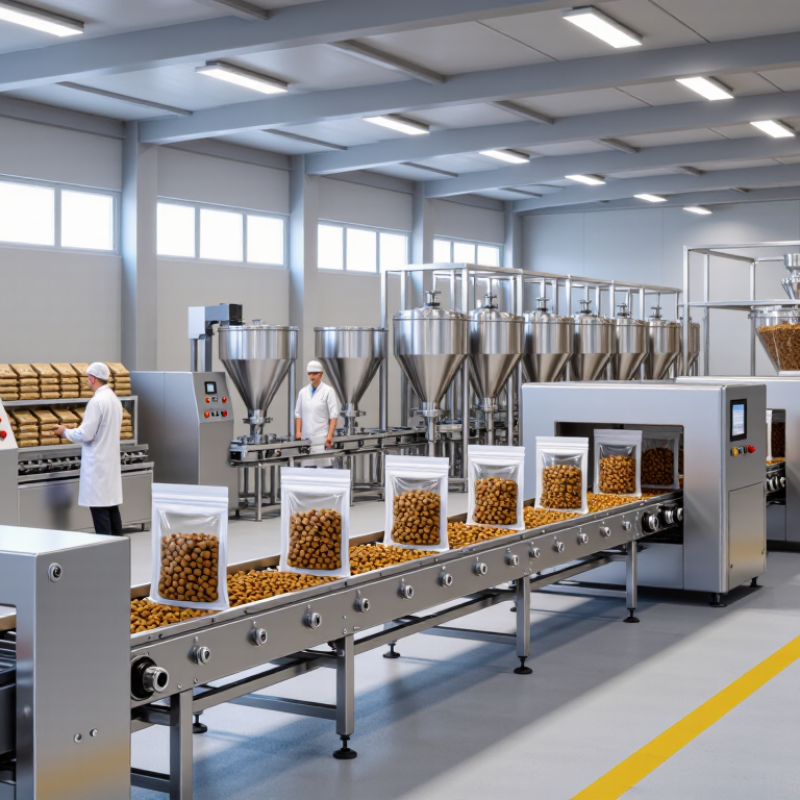
Private label dog food OEM manufacturing in China means a factory makes products for another company to sell under its own label. The buyer may provide a formula, ingredient requirements, and packaging design, or work with the manufacturer to develop them. The factory then handles production steps such as ingredient weighing, mixing, cooking, drying, and bag filling. Details matter. A small change in kibble size can affect drying time and the final texture.
A practical project usually starts with a clear product brief. It should describe the intended dog life stage, nutritional targets, ingredient specifications, bag size, and expected order volume. Buyers can review a sample, check its smell and texture, and ask how each batch is tested and recorded. They should also confirm whether the factory can provide ingredient traceability, production records, and test results for agreed quality measures. Packaging needs attention too: the printed label, net weight, and sealed edge should match the approved sample. Not always. A first sample may need adjustments, and timelines can shift when packaging materials arrive late. Clear written specifications and regular updates make these issues easier to spot before full production.
An OEM project begins with a clear product brief: life stage, target nutrition, texture, pack size, and expected order volume. The manufacturer then develops a formula and checks ingredient availability, cost, and production fit. AAFCO’s Dog Food Nutrient Profiles offer useful formulation references, but meeting a profile does not itself mean a product has been approved. Details matter.
A pilot batch tests the formula on real equipment. For kibble, ingredients are mixed, cooked through extrusion, dried, and coated with fat or flavoring. The team checks moisture, shape, and batch consistency before approving full production. There is no perfect first batch. A sample may look right but crumble after handling, so feedback should be recorded and retested. APPA’s 2024 State of the Industry report put U.S. pet food and treat spending at $64.4 billion in 2023, with $66 billion estimated for 2024. That scale makes dependable planning important.
Before shipment, the OEM should verify ingredient records, production logs, label details, and finished-product checks. FDA’s animal-food preventive-controls rule requires covered facilities to assess hazards and apply appropriate controls. Buyers can request test results and traceability records, then confirm that the tested sample matches the production batch. Keep a retain sample. It can help investigate quality concerns later. Packaging tests matter too: a sealed bag should protect kibble from moisture during storage and transit.
Private-label dog food OEM programs can support several formula directions, each with a clear feeding purpose. Options may include dry kibble, wet food, and meal toppers. Recipes can reflect life stage, activity level, or preferred protein sources. Ingredient choices should be reviewed by qualified animal nutrition professionals. Claims need evidence. That step is easy to rush.
Product format affects more than appearance. Kibble size and shape influence portioning and handling, while cans, trays, and pouches suit different serving routines. Packaging also affects storage and transport. Ask manufacturers about available filling lines, batch sizes, and packaging materials before settling on a format. A recipe may work well in a bowl but prove difficult to produce consistently at scale.
Customization can cover texture, piece size, recipe details, and label presentation. Pilot batches help assess palatability, production consistency, and how the food holds up during storage. Shelf-life expectations should be supported by appropriate testing, not guesswork. It is easy to over-customize. A distinctive shape or extra ingredient may add cost without improving the feeding experience. No first draft is perfect; review samples, note what seems off, and revise before confirming production.
AAFCO dog food nutrient profile minimums for crude protein and crude fat, shown on a dry-matter basis.
OEM context: These profile minimums can inform formula briefs. Private label options may include dry kibble, wet food, and treats, with recipes customized to life stage and other product requirements. Confirm available formats, formulation capabilities, and applicable compliance requirements with each manufacturer.
Reference: AAFCO Dog Food Nutrient Profiles. Values are minimum percentages on a dry-matter basis; they are not finished-product guarantees.
Evaluating a China-based dog food OEM manufacturer takes more than comparing prices. Ask how the factory controls each production batch, from ingredient intake to sealed packaging. Request a sample, then check its texture, smell, kibble size, and label details against your written specification. Details matter. A sample alone cannot show whether later batches will match it.
Review ingredient records, production procedures, and test reports, and confirm that documents apply to the product and facility being discussed. Ask how the manufacturer handles supplier changes, quality complaints, and retained samples. If possible, visit the site or arrange an independent audit. Look for clean storage areas, clear batch records, and staff who can explain their checks without vague promises. I would not treat a factory visit as proof of everything. It is one useful piece of evidence.
Discuss minimum order quantities, lead times, packaging options, and who approves formula or label changes before production. Put agreed specifications and inspection steps in writing. Notice how quickly the team answers technical questions; slow or unclear replies can create costly delays. No supplier is perfect, and a polished presentation may hide weak controls. That takes time. Compare evidence, not confidence, and leave room to reassess after the first production run.
China Best Private Label Dog Food OEM Manufacturers
Quality control begins before the first kibble is made. FEDIAF’s 2024 European industry report counted 299 million pets across Europe, reflecting a large and demanding market. For private-label dog food, OEM buyers should verify supplier controls through documented audits, ingredient traceability, and batch-level records. Ask for certificates of analysis covering moisture, protein, fat, and microbiological limits. Then compare results with the approved product specification. Small gaps matter.
At the factory, review hazard analysis, pest control, sanitation logs, and procedures for handling ingredient changes. The U.S. FDA’s Preventive Controls for Animal Food rule requires covered facilities to identify hazards and apply risk-based controls. Testing should match the recipe and destination market; a generic certificate may not answer a specific import authority’s questions. Keep a retained sample from each production lot. It helps when a shipment’s appearance or odor seems different.
Export readiness is market-specific. Confirm that ingredients, facility registration, health certificates, label language, nutrition declarations, and shipping documents meet the destination’s current requirements. Codex’s Code of Practice on Good Animal Feeding offers a useful reference for safe sourcing and production, but it does not replace national rules. One weak point in many supplier reviews is overreliance on certificates. Visit the site when possible, inspect records, and check how corrective actions are closed. Audits can miss things.
| Evaluation Area | Control Point | Evidence or Requirement | Export Relevance |
|---|---|---|---|
| Supplier qualification | Approval and ongoing review of ingredient suppliers | Maintain approved-supplier records, ingredient specifications, risk assessments, and certificates of analysis where appropriate. Audit frequency should be risk-based. | Supports ingredient traceability and buyer or regulator audits; requirements depend on the destination market. |
| Ingredient control | Identity, condition, storage, and lot traceability | Check incoming materials against purchase specifications and retain supplier, delivery, lot, and inspection records. Testing should reflect ingredient and hazard risks. | Helps demonstrate feed-safety controls and investigate a product issue or recall. |
| Formula and batch control | Approved recipe, weighing, mixing, and production records | Use controlled formula versions and documented batch records, including ingredient lots, quantities, production date, and any deviations or rework. | Supports consistent product composition and accurate label information. |
| Process validation | Thermal processing and other hazard-control steps | Validate processing controls for the product and hazards involved; monitor and document critical operating conditions, corrective actions, and verification activities. | For the United States, applicable animal-food facilities are subject to preventive-control requirements under 21 CFR Part 507, unless an exemption applies. |
| Facility hygiene | Cleaning, pest control, personnel practices, and equipment maintenance | Document sanitation procedures, cleaning checks, pest-control activities, maintenance, and staff training. Environmental monitoring may be used where justified by risk. | EU feed hygiene requirements are set out in Regulation (EC) No 183/2005; applicable registration or approval depends on the activity. |
| Finished-product testing | Nutritional composition and risk-based safety testing | Use a documented sampling plan and test against the approved product specification and relevant destination-market rules. There is no single universal test panel or limit for every dog food. | Retain test reports and link samples to production lots; importers or authorities may require additional evidence. |
| Contaminant management | Risk assessment for microbiological, chemical, and physical hazards | Identify relevant hazards based on ingredients and process; apply preventive controls and verify them through suitable inspection, testing, or supplier documentation. | Applicable limits and testing expectations vary by ingredient, product type, and destination jurisdiction. |
| Traceability and recall | Linking finished-product lots to ingredients and distribution records | Maintain records that allow each production lot to be traced to its ingredient lots and customers. Establish documented procedures for complaints, product withdrawal, and recall. | Supports prompt investigation and response to customer or regulatory concerns. |
| United States facility requirements | FDA food-facility registration and animal-food preventive controls | Facilities that manufacture, process, pack, or hold animal food for the U.S. market generally must meet applicable FDA registration requirements and renew registration every other year. 21 CFR Part 507 sets animal-food current good manufacturing practice and preventive-control requirements, subject to exemptions. | Confirm facility status and applicable exemptions before shipment; the U.S. importer may have separate obligations. |
| United States import requirements | Prior Notice and importer verification | FDA Prior Notice is generally required for food shipments, including animal food, imported or offered for import into the United States. The Foreign Supplier Verification Program requirements in 21 CFR Part 1, Subpart L generally apply to U.S. importers, subject to exemptions. | Coordinate shipment information and supporting records with the importer before dispatch. |
| European Union feed rules | Feed hygiene, labeling, additives, and animal by-products | Relevant legislation can include Regulation (EC) No 183/2005 on feed hygiene, Regulation (EC) No 767/2009 on feed marketing and use, Regulation (EC) No 1831/2003 on feed additives, and Regulations (EC) No 1069/2009 and (EU) No 142/2011 on animal by-products. | Applicability depends on the product, ingredients, manufacturing activity, and current EU import conditions. |
| Product labeling | Ingredient declaration, intended use, directions, and other required particulars | Prepare a destination-specific label and verify claims, units, language, and required statements against applicable rules. In the United States, AAFCO model regulations are adopted through state laws and regulations; they are not, by themselves, federal law. | Obtain a label review for each market and product formula before printing or shipment. |
| Export documentation | Certificates and commercial shipping documents | Common documents may include a commercial invoice, packing list, certificate of origin, product specification, and certificate of analysis. Health or sanitary certificates are required only when specified by the destination country or applicable trade conditions. | Confirm the exact certificate format, issuing authority, and import conditions with the buyer and relevant authorities before production or shipment. |
Regulatory requirements vary by destination, product composition, and manufacturing activity. Verify current rules and import conditions with the competent authorities and the importer before shipment.
A factory makes dog food for another company’s label, using agreed formulas, ingredients, and packaging. Recipe development may also be supported.
Specify the dog’s life stage, nutrition targets, ingredients, bag size, and expected order volume. Details save time.
Check kibble size, smell, texture, and packaging against the approved specifications. A sample may need another round.
Ask for ingredient traceability, batch records, and test results for agreed quality measures. Keep those records.
Request results for moisture, protein, fat, and microbiological limits. Compare each result with the approved specification.
Review sanitation logs, pest controls, hazard procedures, and records of ingredient changes. Paperwork is not the whole picture.
Confirm ingredients, facility status, health documents, label language, nutrition declarations, and shipping papers for the destination market. Requirements vary.
It allows comparison if a shipment looks or smells different. Helpful, but not conclusive.
A visit can reveal how records are kept and corrective actions are handled. Audits can miss things.
Private Label Dog Food OEM manufacturing in China enables businesses to develop dog food products under their own labels while working with a manufacturing partner for production. The process typically begins with defining product goals, selecting ingredients and nutritional targets, and agreeing on packaging and order requirements. Manufacturers may offer dry, wet, or other suitable formats, along with options to adjust recipes, sizes, and packaging to meet different market needs.
Choosing a China-based manufacturer requires careful review of production capabilities, communication, quality procedures, and experience with export documentation. Buyers should clarify how ingredients are sourced, how batches are monitored, and what testing and traceability records are available. A reliable production plan combines consistent quality checks with appropriate food safety controls and destination-market requirements, helping ensure that each order is produced and prepared for export according to agreed specifications.